

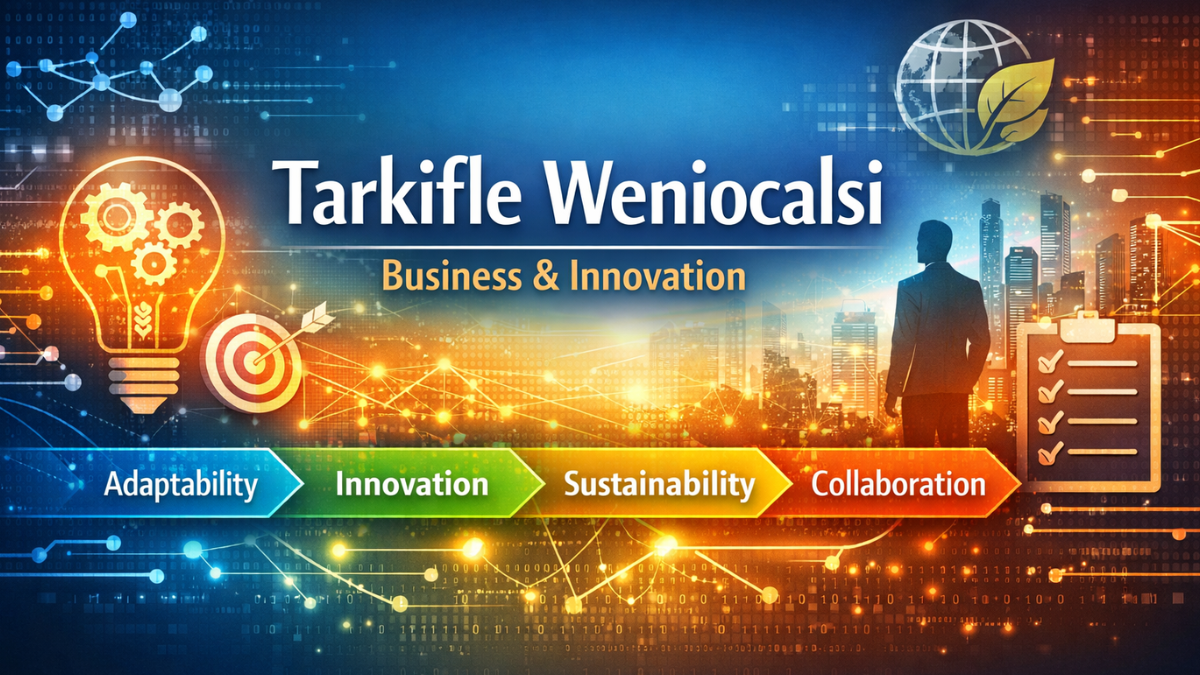
In today’s rapidly evolving digital and creative landscape, new terms and conceptual frameworks appear almost every day. One such intriguing and emerging keyword is tarkifle weniocalsi. While it may sound unfamiliar at first glance, this concept has started gaining attention in innovation-driven circles, strategic development discussions, and digital transformation communities.
This in-depth article explores what tarkifle weniocalsi means, its possible origins, core principles, practical applications, and why it could become increasingly relevant in the near future. By the end, you will have a comprehensive understanding of how this concept can be interpreted and applied across various domains.
What Is Tarkifle Weniocalsi?
Tarkifle weniocalsi can be described as a multidimensional framework that combines adaptability, structured creativity, and systemic optimization. At its core, it represents a philosophy of integrating innovative thinking with practical execution strategies.
Rather than being limited to one specific industry, tarkifle weniocalsi functions as a flexible methodology. It emphasizes:
-
Strategic adaptability
-
Cross-functional collaboration
-
Continuous improvement
-
Dynamic systems thinking
-
Long-term sustainability
In simpler terms, it encourages individuals and organizations to think creatively while remaining grounded in measurable outcomes.
The Conceptual Foundations of Tarkifle Weniocalsi
Although tarkifle weniocalsi is not tied to a single historical movement, it appears to draw influence from several established disciplines:
1. Systems Thinking
Systems thinking focuses on understanding how individual components interact within a larger framework. Tarkifle weniocalsi applies this by encouraging a holistic approach rather than isolated problem-solving.
2. Agile Methodology
Agile emphasizes iteration, flexibility, and quick response to change. Tarkifle weniocalsi shares this adaptive mindset but expands it beyond software development into broader strategic planning.
3. Creative Optimization
Traditional optimization focuses solely on efficiency. Tarkifle weniocalsi adds creativity to the equation—seeking not only better results but smarter and more innovative solutions.
Core Principles of Tarkifle Weniocalsi
To fully grasp this concept, it helps to break it down into its fundamental principles.
Adaptive Structuring
Instead of rigid hierarchies, tarkifle weniocalsi promotes flexible structures that can evolve. Organizations adopting this approach design systems that allow quick restructuring without disrupting overall stability.
Integrated Innovation
Innovation should not exist in isolation. It encourages embedding creativity directly into operational processes.
Sustainable Progress
Short-term gains are not enough. Sustainable growth, environmental responsibility, and ethical consideration are key aspects of this philosophy.
Continuous Feedback Loops
Progress is guided by constant feedback and evaluation. Rather than waiting for large review cycles, small and frequent adjustments are preferred.
Why Tarkifle Weniocalsi Matters in the Digital Era
In the digital age, businesses and individuals face constant change—technological disruption, shifting consumer expectations, and global competition. Static models often fail under such pressure.
It provides a framework for resilience. It allows:
-
Faster adaptation to technological shifts
-
More responsive decision-making
-
Greater alignment between creativity and execution
-
Improved risk management
By merging structure with flexibility, it offers a balanced approach to navigating complexity.
Practical Applications of Tarkifle Weniocalsi
The beauty of it lies in its versatility. Below are some practical domains where it can be applied.
Business Strategy
Companies can use this framework to align innovation teams with operational departments. Instead of separate innovation labs, creativity becomes integrated into daily workflows.
Education
In educational institutions, it can inspire curriculum design that blends theoretical learning with practical experimentation.
Technology Development
Tech startups can apply their adaptive structuring principle to pivot quickly while maintaining a stable core mission.
Personal Development
On an individual level, it can be applied to goal-setting. It encourages flexibility in planning while maintaining long-term vision.
Key Benefits of Implementing Tarkifle Weniocalsi
Organizations that embrace this concept may experience multiple advantages.
Increased Efficiency
Creative optimization often leads to discovering faster and smarter solutions.
Enhanced Collaboration
By integrating innovation into all departments, silos are reduced and communication improves.
Greater Resilience
Flexible systems can withstand disruptions more effectively.
Long-Term Sustainability
Because the framework prioritizes sustainable progress, growth becomes more stable over time.
Challenges and Considerations
No framework is without limitations. Implementing tarkifle weniocalsi can present certain challenges.
Resistance to Change
People often prefer familiar systems. Transitioning to adaptive structures may initially cause discomfort.
Over-Flexibility
Too much flexibility can create confusion. Balance is essential.
Resource Allocation
Continuous feedback and optimization require time and effort. Proper resource planning is crucial.
Understanding these challenges ensures that implementation remains strategic rather than chaotic.
Steps to Adopt Tarkifle Weniocalsi
If you’re considering applying this concept, here is a step-by-step approach:
Step 1: Evaluate Current Structures
Analyze existing workflows and identify rigid bottlenecks.
Step 2: Introduce Flexible Frameworks
Gradually implement adaptive structures without disrupting core operations.
Step 3: Encourage Cross-Department Collaboration
Break down communication barriers and foster shared responsibility.
Step 4: Implement Continuous Feedback
Create systems for frequent evaluation and improvement.
Step 5: Measure Sustainable Outcomes
Focus not only on short-term performance metrics but also on long-term impact.
The Future Potential of Tarkifle Weniocalsi
As global markets become increasingly interconnected, frameworks that blend adaptability with structure will gain importance. It represents a forward-thinking approach that may shape how organizations design systems in the coming years.
Its emphasis on sustainability also aligns with global priorities, including environmental responsibility and ethical governance. As digital transformation accelerates, such integrated methodologies could become essential rather than optional.
Tarkifle Weniocalsi and Innovation Culture
One of the most significant impacts of this concept is its influence on organizational culture. Rather than treating innovation as a separate department, it encourages embedding creative thinking into everyday tasks.
This cultural shift leads to:
-
Empowered employees
-
Faster problem resolution
-
Greater accountability
-
Continuous learning environments
When culture aligns with structure, transformation becomes more sustainable.
Comparing Tarkifle Weniocalsi with Traditional Models
Traditional models often rely on rigid planning and long approval chains. While this can provide stability, it may slow down responsiveness.
In contrast, tarkifle weniocalsi:
-
Emphasizes adaptability over rigidity
-
Encourages experimentation
-
Values feedback over static planning
-
Integrates innovation rather than isolating it
This comparison highlights why modern organizations may find it appealing.
Conclusion
Tarkifle weniocalsi represents more than just a new keyword—it symbolizes a shift toward adaptive, sustainable, and integrated thinking. By blending creativity with structured execution, it offers a balanced framework for navigating complexity in business, education, technology, and personal growth.
As industries continue to evolve, methodologies that promote flexibility without sacrificing stability will become increasingly important. Whether adopted formally or informally, the principles behind tarkifle weniocalsi encourage a mindset of continuous improvement, collaboration, and long-term impact.
Frequently Asked Questions (FAQs)
1. Is tarkifle weniocalsi a specific business model?
No, it is better described as a conceptual framework or philosophy rather than a rigid business model. It can be adapted across industries.
2. Can small businesses apply tarkifle weniocalsi?
Yes, small businesses may even benefit more because they can implement flexible structures faster than large corporations.
3. Does tarkifle weniocalsi replace traditional management systems?
Not necessarily. It can complement existing systems by adding adaptability and continuous improvement elements.
4. Is technical expertise required to implement it?
No specific technical expertise is required. However, leadership commitment and a willingness to embrace change are essential.
5. How long does it take to see results?
Results depend on implementation quality and organizational readiness. Some benefits, like improved collaboration, may appear quickly, while long-term sustainability takes time.