

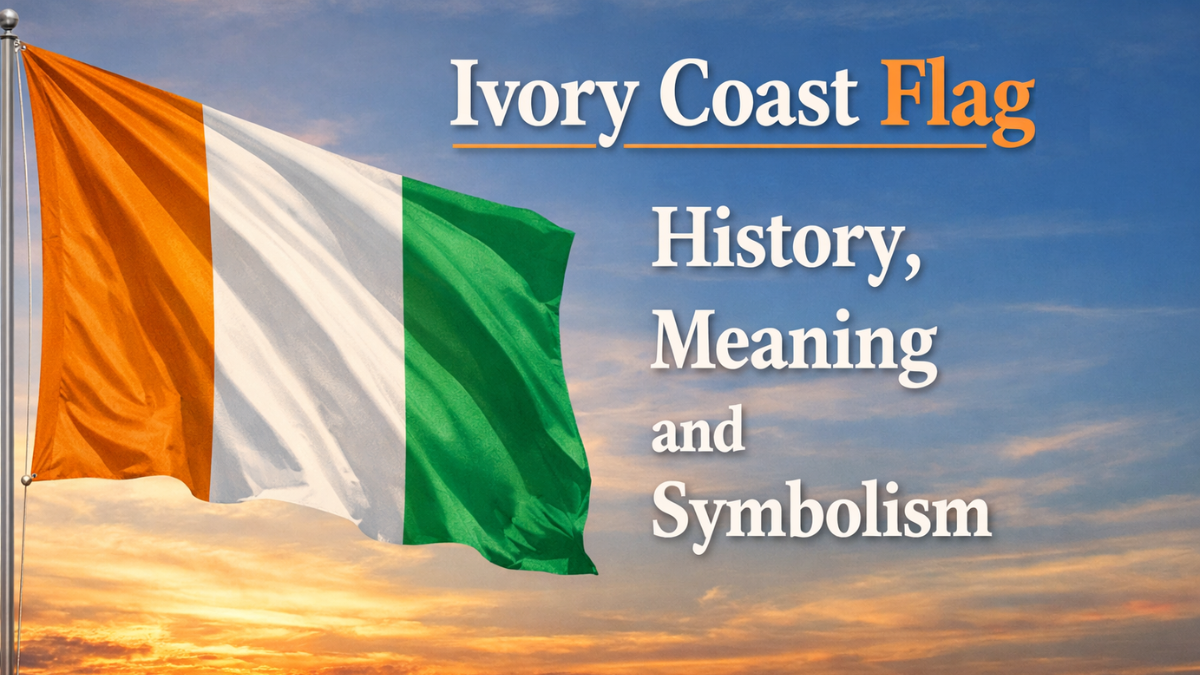
The Ivory Coast flag is a powerful national symbol that represents the identity, culture, and aspirations of the Republic of Côte d’Ivoire. Like many national flags, it tells a story through its colors and design—reflecting the country’s past, its struggles, and its hopes for the future. Though simple in appearance, the flag carries deep meaning and is an essential part of the nation’s pride.
In this article, we will explore the history, design, symbolism, and significance of the Ivory Coast flag, along with interesting facts and frequently asked questions.
Overview of the Ivory Coast Flag
The Ivory Coast flag consists of three vertical stripes of equal width:
-
Orange (hoist side)
-
White (center)
-
Green (fly side)
This clean and simple tricolor design is both visually appealing and symbolically rich. It reflects unity, peace, and the natural wealth of the country.
Historical Background
Pre-Independence Period
Before gaining independence, Côte d’Ivoire was part of the French colonial empire. During this period, the French flag was used as the official national flag. However, as the independence movement grew stronger across Africa in the mid-20th century, the need for a unique national identity became more important.
Adoption of the Flag
The Ivory Coast flag was officially adopted on December 3, 1959, just months before the country gained independence from France on August 7, 1960. The design was chosen to reflect national unity and to distinguish the country from its colonial past.
The flag was created with careful consideration of the country’s geography, culture, and aspirations.
Meaning of the Colors
Each color in the Ivory Coast flag holds a specific meaning that represents different aspects of the nation:
Orange: The Land and Its Energy
The orange stripe symbolizes:
-
The fertile land of the savannah in the northern regions
-
The energy and dynamism of the people
-
The country’s progress and development
It reflects the strength and resilience of the Ivorian people, as well as their determination to build a prosperous nation.
White: Peace and Unity
The white stripe represents:
-
Peace and harmony
-
Unity among diverse ethnic groups
-
Justice and fairness
After gaining independence, unity was crucial for nation-building. The white color emphasizes the importance of living together peacefully despite cultural differences.
Green: Hope and Natural Wealth
The green stripe stands for:
-
The lush forests in the southern part of the country
-
Agriculture and economic growth
-
Hope for the future
Ivory Coast is known for its rich natural resources and agricultural production, especially cocoa. The green color reflects this abundance and the promise of continued prosperity.
Symbolism and National Identity
The Ivory Coast flag is more than just a national emblem—it is a reflection of the country’s identity.
Unity in Diversity
Côte d’Ivoire is home to many ethnic groups, languages, and traditions. The flag’s simple yet balanced design symbolizes the unity of these diverse communities under one nation.
Balance Between Regions
The three colors also represent different geographical regions:
-
Orange for the north (savannah)
-
White for unity across the country
-
Green for the south (forests)
This balance highlights the importance of equal representation and harmony among all parts of the country.
Comparison with Other Flags
Similarity to Ireland’s Flag
One of the most common points of confusion is between the Ivory Coast flag and the Irish flag. Both have three vertical stripes in orange, white, and green. However, there are key differences:
-
Order of colors:
-
Ivory Coast: Orange–White–Green
-
Ireland: Green–White–Orange
-
-
Meaning:
-
The meanings behind the colors differ significantly based on each country’s history and culture.
-
This distinction is important to avoid confusion when identifying the flags.
Design and Proportions
The Ivory Coast flag follows a standard rectangular shape with a proportion of 2:3 (height to width). Each of the three vertical stripes is of equal size, creating a balanced and symmetrical appearance.
The simplicity of the design makes it easy to reproduce and recognize, which is an important feature for a national flag.
Cultural and Political Significance
A Symbol of Independence
The flag represents the end of colonial rule and the beginning of self-governance. It serves as a reminder of the struggles and sacrifices made to achieve independence.
National Pride
The Ivory Coast flag is displayed during:
-
National holidays
-
Sporting events
-
Political ceremonies
-
International gatherings
It is a source of pride for Ivorians both within the country and abroad.
Use of the Flag Today
The flag is widely used in both official and unofficial contexts:
Government and Official Use
-
Flown on government buildings
-
Used in official documents and ceremonies
-
Displayed during diplomatic events
Public and Everyday Use
-
Seen in schools and universities
-
Used during sports events, especially football matches
-
Displayed during national celebrations
The flag plays an important role in uniting people and reinforcing national identity.
Interesting Facts About the Ivory Coast Flag
-
The flag was adopted before independence was officially declared.
-
Its design reflects both geographical and cultural elements of the country.
-
It is often confused with the Irish flag due to similar colors.
-
The colors were carefully chosen to represent unity, peace, and growth.
-
The flag has remained unchanged since its adoption in 1959.
Importance in Sports and Global Representation
Ivory Coast has gained international recognition through sports, especially football. During international competitions, the flag becomes a powerful symbol of national pride.
Fans wave the flag to support their team, and it becomes a unifying symbol that brings people together regardless of their background.
Educational Significance
The Ivory Coast flag is often taught in schools as part of national history and civic education. Students learn about:
-
The meaning of the colors
-
The history of independence
-
The importance of national symbols
This helps instill a sense of patriotism and awareness among young citizens.
Evolution and Stability
Unlike some countries that have changed their flags multiple times, the Ivory Coast flag has remained the same since its adoption. This stability reflects:
-
A strong national identity
-
Consistency in values and symbolism
-
Respect for historical heritage
FAQs About the Ivory Coast Flag
1. What do the colors of the Ivory Coast flag mean?
The colors represent:
-
Orange: Land and energy
-
White: Peace and unity
-
Green: Hope and natural wealth
2. When was the Ivory Coast flag adopted?
The flag was adopted on December 3, 1959, before the country gained independence in 1960.
3. Why does the Ivory Coast flag look like Ireland’s flag?
Both flags use orange, white, and green vertical stripes. However, the order is reversed, and the meanings behind the colors are different.
4. What is the ratio of the Ivory Coast flag?
The flag has a 2:3 ratio, meaning its length is one and a half times its height.
5. Has the Ivory Coast flag ever changed?
No, the flag has remained unchanged since its adoption in 1959.
6. What does the flag symbolize overall?
It symbolizes unity, peace, progress, and the natural richness of the country.
7. Where is the Ivory Coast flag used?
It is used in government buildings, schools, international events, and public celebrations.
Conclusion
The Ivory Coast flag is a meaningful and enduring symbol of the nation’s identity. Through its three simple colors—orange, white, and green—it tells a story of land, peace, unity, and hope. It reflects the country’s journey from colonial rule to independence and its ongoing efforts to build a prosperous and unified society.
Despite its simple design, the flag carries deep cultural, historical, and emotional significance. It stands as a reminder of the past, a representation of the present, and a symbol of hope for the future.