

Understanding basic kitchen measurements is essential for anyone who enjoys cooking or baking. One of the most common questions beginners and even experienced cooks ask is: how many tsp in a tbsp? While it may seem simple, knowing the correct conversion can make a big difference in the outcome of your recipes.
In this detailed guide, we’ll explore the answer, explain why it matters, provide useful tips, and answer frequently asked questions to ensure you never get confused again.
The Basic Answer: How Many Tsp in a Tbsp?
The standard conversion is:
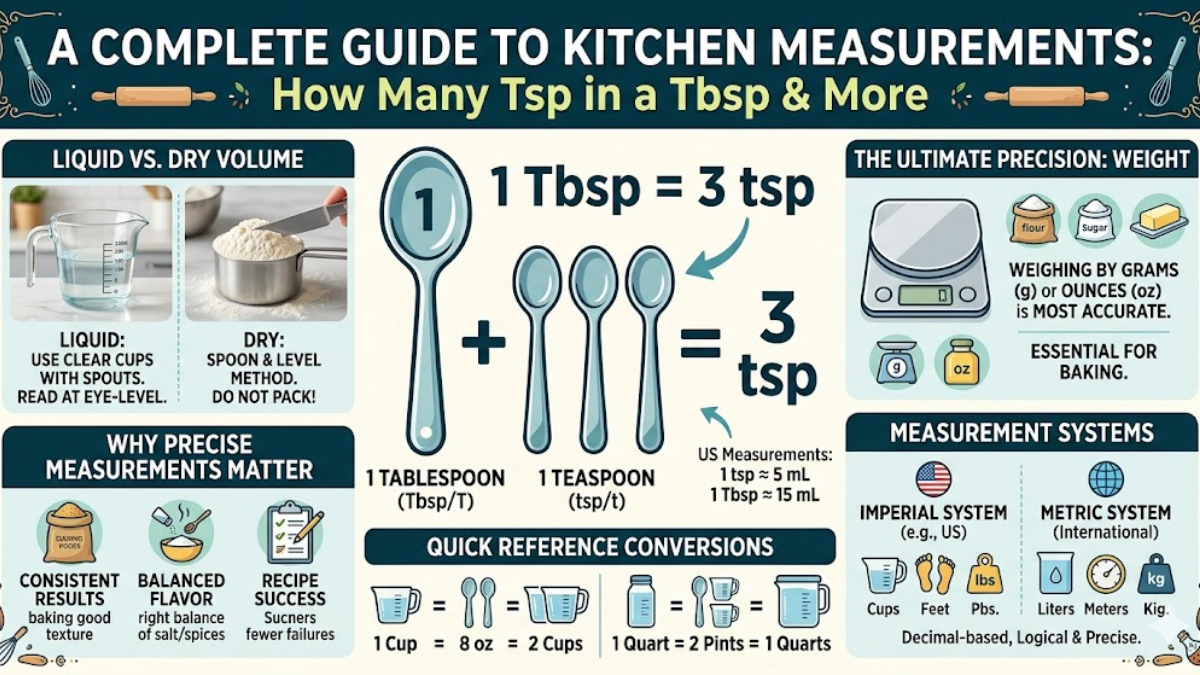
1 tablespoon (tbsp) = 3 teaspoons (tsp)
This measurement is widely accepted in cooking and baking across most countries, including the United States and many other parts of the world.
Why This Conversion Matters
You might wonder why such a small measurement matters so much. The truth is, cooking—especially baking—is a science. Even a slight miscalculation can affect:
- Taste
- Texture
- Consistency
- Appearance
For example, adding too much salt or baking powder because of incorrect measurement can completely ruin a dish.
Understanding Teaspoons and Tablespoons
What Is a Teaspoon (tsp)?
A teaspoon is a small unit of volume commonly used in cooking. It is typically used for:
- Spices
- Baking powder or soda
- Flavor extracts
- Salt
What Is a Tablespoon (tbsp)?
A tablespoon is a larger unit of measurement and is often used for:
- Oils
- Butter
- Sugar
- Liquid ingredients
Since 1 tablespoon equals 3 teaspoons, tablespoons help measure larger quantities more conveniently.
Quick Conversion Chart
Here’s a handy chart to help you with quick conversions:
| Tablespoons (tbsp) | Teaspoons (tsp) |
|---|---|
| 1 tbsp | 3 tsp |
| 2 tbsp | 6 tsp |
| 3 tbsp | 9 tsp |
| 4 tbsp | 12 tsp |
| 5 tbsp | 15 tsp |
This chart is especially useful when scaling recipes up or down.
Converting in Reverse
Sometimes, you may need to convert teaspoons into tablespoons. Here’s how:
1 teaspoon = 1/3 tablespoon
So, if you have:
- 3 tsp = 1 tbsp
- 6 tsp = 2 tbsp
- 9 tsp = 3 tbsp
Simply divide the number of teaspoons by 3 to get tablespoons.
Measuring Tips for Accuracy
Accurate measurement is crucial for achieving the best results. Here are some tips:
1. Use Proper Measuring Spoons
Always use standard measuring spoons rather than regular kitchen spoons. Household spoons vary in size and can lead to incorrect measurements.
2. Level Your Measurements
For dry ingredients, use a flat edge (like a knife) to level off the spoon.
3. Don’t Pack Ingredients Unless Stated
Ingredients like brown sugar may need packing, but most others should be measured lightly.
4. Measure Liquids at Eye Level
For liquid ingredients, ensure you’re measuring at eye level to avoid errors.
Differences Between US and Metric Measurements
Although the 1 tbsp = 3 tsp rule is standard, there can be slight variations depending on the system used.
US Standard:
- 1 tbsp = 14.79 ml
- 1 tsp = 4.93 ml
Metric (Common in Many Countries):
- 1 tbsp = 15 ml
- 1 tsp = 5 ml
Despite these small differences, the ratio of 3 teaspoons per tablespoon remains consistent, making conversions simple.
Why Recipes Use Different Units
Recipes may use teaspoons or tablespoons depending on:
- Ingredient quantity
- Precision required
- Tradition or regional standards
For example:
- Spices are usually measured in teaspoons
- Oils or liquids are often measured in tablespoons
Scaling Recipes Easily
Knowing how many tsp in a tbsp helps when adjusting recipe sizes.
Example:
If a recipe calls for 2 tablespoons of sugar but you only have a teaspoon:
2 tbsp = 6 tsp
This makes it easy to continue cooking without interruption.
Common Kitchen Conversions
Here are a few additional conversions that go hand-in-hand with tsp and tbsp:
- 1 tbsp = 3 tsp
- 1 tbsp = 1/2 fluid ounce
- 2 tbsp = 1/8 cup
- 4 tbsp = 1/4 cup
- 16 tbsp = 1 cup
These conversions can make cooking more flexible and efficient.
Practical Examples in Cooking
Example 1: Adding Spices
A recipe calls for 1 tablespoon of cumin, but you only have a teaspoon measure.
Solution: Use 3 teaspoons of cumin.
Example 2: Reducing Salt
If a recipe requires 1 tablespoon of salt but you want to reduce it:
- Use 2 teaspoons instead of 3
This allows you to adjust flavors without confusion.
Mistakes to Avoid
Even simple conversions can lead to mistakes. Here are common errors:
1. Confusing tsp and tbsp
This is one of the most frequent mistakes. Remember:
- tsp = teaspoon (small)
- tbsp = tablespoon (large)
2. Using Non-Standard Spoons
Regular spoons are not accurate measuring tools.
3. Ignoring Recipe Instructions
Some recipes specify “heaping” or “level” measurements—don’t ignore these details.
Tips for Beginners
If you’re new to cooking, keep these tips in mind:
- Memorize the 1 tbsp = 3 tsp rule
- Keep a conversion chart in your kitchen
- Invest in a good set of measuring spoons
- Practice measuring ingredients regularly
Over time, these conversions will become second nature.
Why Precision Is More Important in Baking
Cooking allows some flexibility, but baking requires exact measurements. Incorrect tsp-to-tbsp conversions can lead to:
- Dense cakes
- Flat cookies
- Overly salty or bland flavors
That’s why understanding this simple conversion is essential for baking success.
Handy Memory Tricks
Here are some easy ways to remember the conversion:
- Think of a triangle: 3 sides = 3 teaspoons in 1 tablespoon
- Remember “3 tsp make 1 tbsp”
- Associate tablespoon with “bigger,” so it must contain multiple teaspoons
Using Digital Tools vs Manual Conversion
While apps and digital scales are helpful, knowing manual conversions is still important because:
- You may not always have access to tools
- It saves time during cooking
- It improves your confidence in the kitchen
FAQs
1. How many teaspoons are in a tablespoon?
There are 3 teaspoons in 1 tablespoon.
2. Can I use a regular spoon instead of a measuring spoon?
It’s not recommended because regular spoons vary in size and can lead to inaccurate measurements.
3. Is this conversion the same worldwide?
Yes, the ratio of 1 tbsp = 3 tsp is consistent, though slight differences in milliliters may exist.
4. What is half a tablespoon in teaspoons?
Half a tablespoon equals 1.5 teaspoons.
5. How do I convert 1 teaspoon into tablespoons?
1 teaspoon equals 1/3 of a tablespoon.
6. Why do recipes use teaspoons instead of tablespoons?
Teaspoons are used for smaller quantities where precision is important, such as spices or baking ingredients.
7. Is a tablespoon always 15 ml?
In most metric systems, yes. However, slight variations exist in some regions.
Conclusion
Understanding how many tsp in a tbsp is one of the most basic yet essential skills in cooking. With the simple rule that 1 tablespoon equals 3 teaspoons, you can confidently measure ingredients, adjust recipes, and improve your cooking results.
Whether you’re a beginner or an experienced cook, mastering this conversion will save time, reduce mistakes, and help you create delicious meals with precision. Keep practicing, use proper tools, and soon these measurements will become second nature in your kitchen.