

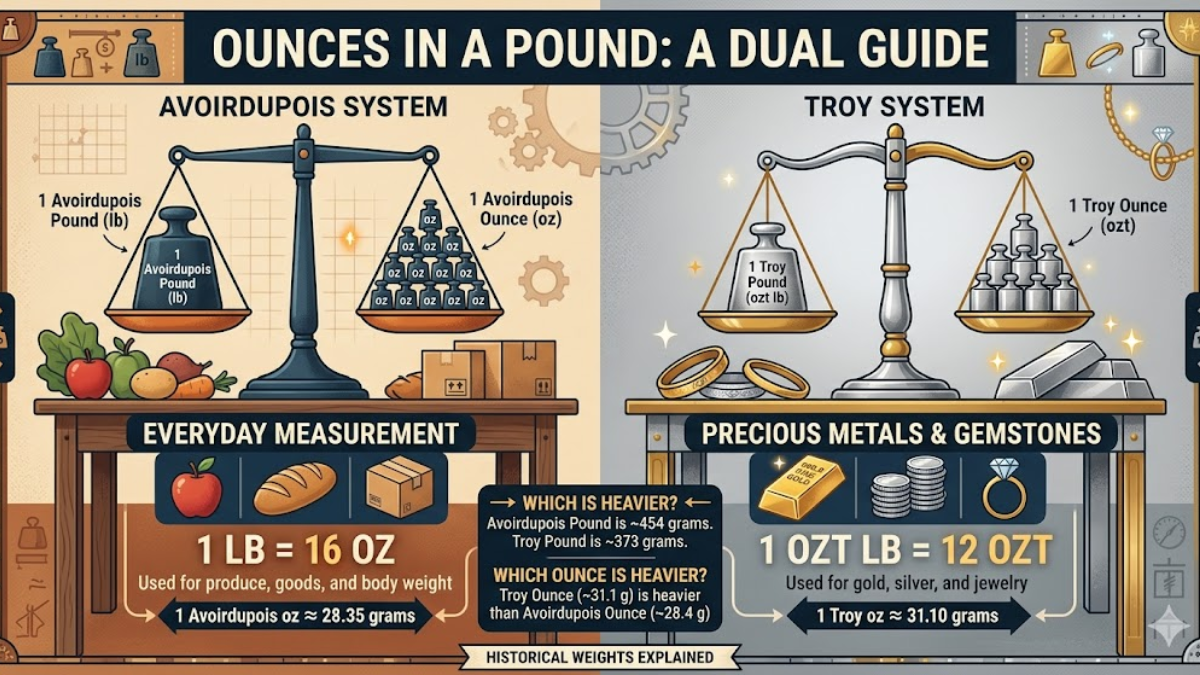
Understanding basic units of measurement is essential in everyday life, whether you’re cooking in the kitchen, shopping for groceries, or studying math and science. One of the most common questions people ask is: how many ounces are in a pound? While the answer is simple, the topic becomes more interesting when you explore how and why these units are used.
In this detailed guide, we’ll break down the relationship between ounces and pounds, explain their origins, discuss their applications, and answer common questions to help you fully understand this essential measurement concept.
Understanding the Basics of Weight Measurement
Weight and mass are measured using different systems around the world. In countries like the United States, the imperial system (also known as the US customary system) is widely used. In this system, pounds and ounces are standard units for measuring weight.
A pound is a larger unit, while an ounce is a smaller unit. These units are commonly used in everyday situations such as cooking recipes, weighing packages, and measuring body weight.
How Many Ounces Are in a Pound?
The simple and direct answer is:
There are 16 ounces in 1 pound.
This means if you have a pound of any substance—whether it’s flour, meat, or fruit—it equals 16 ounces.
Quick Examples:
- 1 pound = 16 ounces
- 2 pounds = 32 ounces
- 0.5 pound = 8 ounces
- 0.25 pound = 4 ounces
This fixed conversion makes it easy to switch between the two units.
The History Behind Pounds and Ounces
The terms “pound” and “ounce” have historical roots that go back thousands of years. The word “pound” comes from the Latin word libra, which is why the abbreviation for pound is lb. The ounce, on the other hand, comes from the Latin word uncia, meaning “one-twelfth part.”
Originally, the Roman system had 12 ounces in a pound, but over time, different regions developed their own systems. The modern standard of 16 ounces per pound became widely accepted in the British imperial system and later adopted in the United States.
Why 16 Ounces in a Pound?
You might wonder why the number 16 was chosen instead of something simpler like 10. The reason lies in practicality.
The number 16 is divisible by many numbers (2, 4, 8), making it convenient for splitting quantities into halves, quarters, and eighths. This was especially useful in trade and commerce before digital scales existed.
Common Uses of Ounces and Pounds
1. Cooking and Baking
Recipes often use ounces and pounds to measure ingredients. For example:
- A recipe may call for 8 ounces of cheese (half a pound)
- A cake recipe might require 1 pound of flour
Using the correct measurements ensures consistency and accuracy in cooking.
2. Grocery Shopping
Food packaging frequently lists weight in both ounces and pounds. For example:
- A bag of rice may weigh 2 pounds (32 ounces)
- A chocolate bar might weigh 4 ounces
Understanding conversions helps you compare prices and quantities effectively.
3. Shipping and Mailing
Postal services use ounces and pounds to determine shipping costs. Lighter packages are often measured in ounces, while heavier ones are measured in pounds.
4. Body Weight and Fitness
In some cases, small weight changes are measured in ounces rather than pounds, especially in medical or fitness contexts.
Converting Between Pounds and Ounces
Converting between these units is straightforward once you remember the basic rule.
Pounds to Ounces:
Multiply the number of pounds by 16.
Example:
3 pounds × 16 = 48 ounces
Ounces to Pounds:
Divide the number of ounces by 16.
Example:
64 ounces ÷ 16 = 4 pounds
Visualizing the Conversion
To better understand the relationship, imagine a pizza cut into 16 equal slices. Each slice represents one ounce, and the whole pizza represents one pound. This simple visualization makes the concept easier to grasp.
Difference Between Fluid Ounces and Weight Ounces
One common source of confusion is the difference between fluid ounces and ounces (weight).
- Ounces (oz) measure weight
- Fluid ounces (fl oz) measure volume
For example:
- 16 ounces (weight) = 1 pound
- 16 fluid ounces = 1 pint (in volume measurement)
These are not interchangeable because they measure different properties.
Pounds and Ounces vs Metric System
While pounds and ounces are widely used in some countries, many parts of the world use the metric system, which includes grams and kilograms.
Basic Metric Conversions:
- 1 pound ≈ 454 grams
- 1 ounce ≈ 28.35 grams
The metric system is based on multiples of 10, making it easier for scientific calculations, but the imperial system remains popular for everyday use in certain regions.
Practical Examples in Daily Life
Understanding how many ounces are in a pound becomes useful in many real-life situations.
Example 1: Cooking Meat
If a recipe requires 1.5 pounds of chicken:
- 1.5 × 16 = 24 ounces
Example 2: Buying Fruits
If apples cost per pound and you buy 8 ounces:
- 8 ounces = 0.5 pound
Example 3: Splitting Portions
If you have a 16-ounce item and want to divide it into 4 equal parts:
- Each part = 4 ounces
Tips for Remembering the Conversion
Here are some simple tricks to help you remember:
- Think of “Sweet 16” – 16 ounces in a pound
- Remember that half a pound is 8 ounces
- Practice conversions regularly
With time, it becomes second nature.
Common Mistakes to Avoid
1. Confusing Ounces with Fluid Ounces
Always check whether the measurement refers to weight or volume.
2. Forgetting the Conversion Factor
Some people mistakenly think there are 12 ounces in a pound due to historical systems.
3. Mixing Metric and Imperial Units
Avoid combining grams with pounds without proper conversion.
Importance in Education and Exams
Students often encounter unit conversions in math and science exams. Knowing that 1 pound equals 16 ounces is a basic but essential concept that forms the foundation for more advanced calculations.
Real-World Applications in Business
Businesses that deal with food, logistics, or manufacturing rely heavily on accurate weight measurements. Even a small error in conversion can lead to financial losses or customer dissatisfaction.
Conclusion
So, how many ounces are in a pound? The answer is simple: 16 ounces make one pound. However, understanding the background, applications, and conversions of these units provides valuable knowledge for everyday life.
Whether you’re cooking, shopping, studying, or working in a professional setting, mastering this basic conversion can save time, reduce errors, and improve accuracy. By practicing regularly and applying it in real-life scenarios, you’ll find it easy to work with ounces and pounds confidently.
FAQs
1. How many ounces are in half a pound?
There are 8 ounces in half a pound.
2. How many ounces are in 2 pounds?
There are 32 ounces in 2 pounds.
3. Is 16 ounces always equal to 1 pound?
Yes, in the standard imperial system, 16 ounces always equal 1 pound.
4. What is the difference between ounces and fluid ounces?
Ounces measure weight, while fluid ounces measure volume.
5. How do I convert ounces to pounds quickly?
Divide the number of ounces by 16 to get the equivalent in pounds.
6. Why does the pound use the abbreviation “lb”?
It comes from the Latin word libra, which was a unit of weight in ancient Rome.
7. Are pounds and ounces used worldwide?
No, many countries use the metric system (grams and kilograms), but pounds and ounces are common in the United States and a few other regions.