

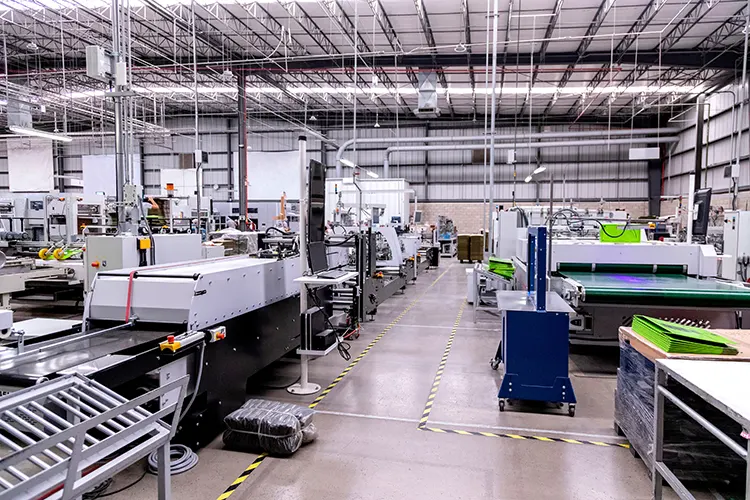
In today’s fast-paced business and manufacturing environment, efficiency, accuracy, and reliability are essential for achieving long-term success. Organizations rely on advanced technologies to optimize workflows, reduce operational costs, and maintain high standards across office and production departments. Two essential tools that support modern operations are corporate printing solutions and advanced precision machining tools.
While corporate printing solutions streamline document management, marketing materials, and office workflows, precision machining tools provide the accuracy and reliability required in industrial manufacturing. Investing in both technologies allows businesses to improve productivity and deliver consistent, high-quality results.
The Importance of Corporate Printing Solutions
For every organization, efficient document handling is crucial. Businesses rely on printed materials such as contracts, invoices, reports, and marketing collateral to maintain smooth operations and professional communication. High-quality corporate printing solutions help companies manage these tasks efficiently while upholding a polished and professional image.
Modern corporate printing systems are designed for high-volume performance, excellent print quality, and operational cost efficiency. Many devices include multifunction capabilities like scanning, copying, and digital archiving, which simplify workflows and reduce administrative complexity.
Another significant advantage of corporate printing solutions is connectivity. Employees can print documents from laptops, smartphones, or cloud-based platforms, ensuring flexibility and productivity across office teams, whether they are on-site or working remotely.
Investing in advanced corporate printing solutions also strengthens document security. Features such as user authentication and secure printing protocols help prevent unauthorized access and protect sensitive company data.
Benefits of Corporate Printing Solutions
Organizations that implement corporate printing solutions experience multiple benefits. First, productivity improves as high-speed printers handle large volumes of work efficiently, reducing delays in document processing.
Second, operational costs are optimized. Modern printers are designed to reduce energy consumption and ink usage, lowering overall office expenses.
Lastly, corporate printing solutions enhance professional credibility. High-quality printed documents reflect positively on the business, building trust with clients, partners, and stakeholders.
Understanding Precision Machining Tools
While office technology supports administrative functions, manufacturing and industrial operations require specialized machinery to produce high-precision components. Precision machining tools are essential for cutting, shaping, drilling, and finishing materials such as metal, plastic, and wood.
These tools are widely used across industries, including automotive manufacturing, aerospace, electronics, and industrial engineering. Precision machining tools ensure accuracy, consistency, and durability in every product, which is critical for maintaining high-quality standards.
Modern precision machining tools often feature digital controls, computer-assisted operations, and automated systems. These enhancements reduce human error, increase production speed, and allow operators to maintain strict tolerances in their work.
Advantages of Precision Machining Tools
Precision machining tools offer several benefits that make them indispensable in industrial production. One of the most significant advantages is accuracy. These tools produce components with exact specifications, which is crucial for machinery and devices that require precision.
Productivity is another benefit. Advanced tools can perform complex operations faster than manual methods, helping manufacturers meet production deadlines efficiently.
Durability is a key factor. High-quality machining tools are designed to handle heavy workloads and continuous operation, minimizing downtime and maintenance requirements.
Automation and digital integration are also essential. Modern tools allow operators to program operations, monitor performance, and ensure consistent quality across production runs.
Integrating Office and Industrial Technology
Successful businesses often combine office technology and industrial machinery to create efficient operations. Corporate printing solutions manage documentation, internal workflows, and marketing materials, while precision machining tools handle production and manufacturing tasks.
For example, companies may use corporate printing solutions to produce technical reports, invoices, and promotional materials efficiently. Simultaneously, manufacturing facilities rely on precision machining tools to produce high-quality components with accuracy and reliability.
By integrating both technologies, organizations can maintain operational efficiency and ensure high standards across office and industrial departments.
Future Trends in Business and Manufacturing Technology
Technology is evolving rapidly in both office and industrial environments. Corporate printing solutions are becoming smarter with cloud connectivity, mobile printing, and automated workflow management. Precision machining tools are advancing with automation, digital monitoring, and AI-assisted controls to improve efficiency and reduce errors.
Organizations that adopt these technologies early can enhance productivity, reduce costs, and stay competitive in today’s fast-paced market.
Conclusion
Efficiency, accuracy, and reliability are essential for businesses aiming for long-term growth. Investing in corporate printing solutions ensures smooth document management, secure workflows, and professional office operations. At the same time, advanced precision machining tools provide the precision, durability, and productivity required for high-quality manufacturing.
By combining office and industrial technologies, businesses can streamline operations, maintain high standards, and build a strong foundation for sustainable growth in today’s competitive business landscape.