

Understanding the term misogynist meaning is important in today’s world, where conversations about gender equality, respect, and social behavior are common. The word “misogynist” is often used in the media, workplaces, schools, and online discussions. However, many people use it without fully understanding what it truly means.
In this article, we will explore the meaning of misogynist, its origin, how it appears in society, signs of misogynistic behavior, the difference between misogyny and sexism, and how it affects individuals and communities. We will also answer frequently asked questions at the end.
What Is the Misogynist Meaning?
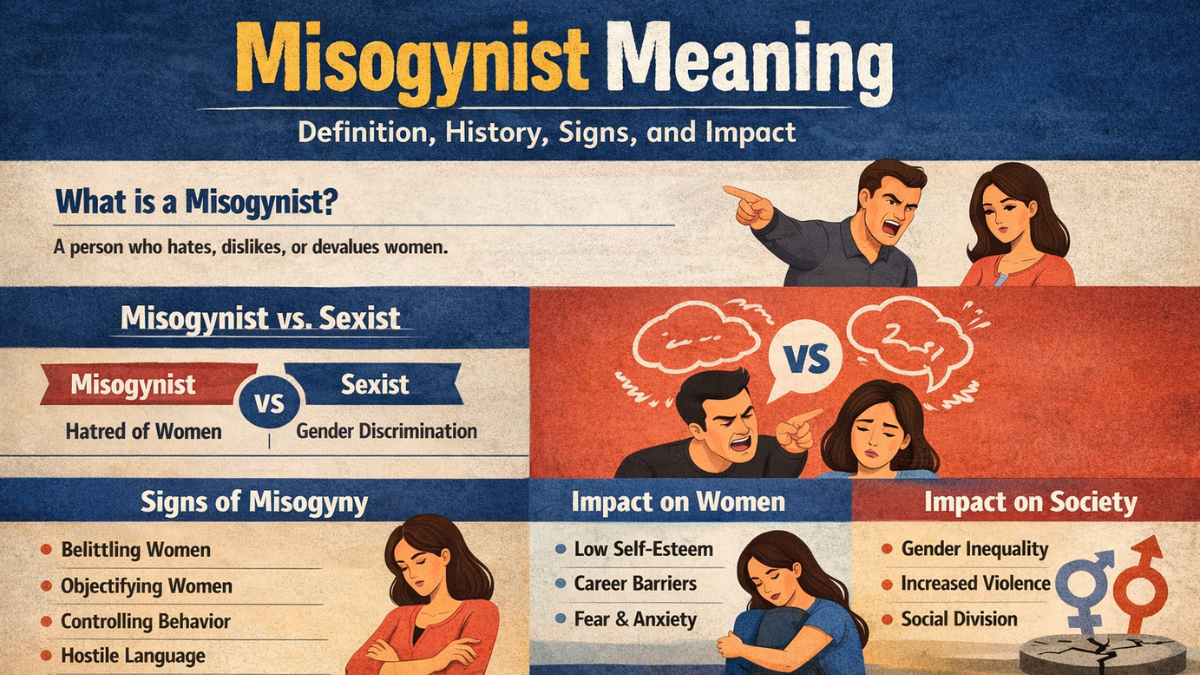
The term “misogynist” refers to a person who strongly dislikes, despises, or shows prejudice against women. It comes from the word “misogyny,” which means hatred or deep dislike of women.
A misogynist may express negative beliefs about women’s abilities, roles, intelligence, or rights. This attitude can show up in different ways, such as in speech, behavior, laws, social norms, or online comments.
In simple words, a misogynist is someone who thinks women are inferior to men or who treats women with disrespect or hostility just because they are women.
Origin and History of the Word Misogynist
The word “misogyny” has ancient roots. It comes from the Greek words:
-
“Misein” meaning “to hate”
-
“Gynē” meaning “woman”
The combined meaning is “hatred of women.”
Throughout history, many societies were male-dominated, and women had fewer rights compared to men. In some cultures, women were not allowed to vote, own property, or receive education. These historical inequalities were often supported by misogynistic beliefs.
Over time, social movements for women’s rights challenged these ideas. Today, while many societies promote gender equality, misogyny still exists in various forms.
Misogynist vs. Sexist: What Is the Difference?
Many people confuse misogyny with sexism, but they are not exactly the same.
Sexism
Sexism refers to discrimination or prejudice based on someone’s gender. It can affect both men and women, although women are more commonly affected.
For example:
-
Believing that men are better leaders than women.
-
Paying women less for the same job as men.
Misogyny
Misogyny is specifically about hatred, dislike, or deep contempt for women. It is often more intense and emotionally charged than sexism.
In simple terms:
-
Sexism is discrimination based on gender.
-
Misogyny is hatred or strong prejudice against women.
A person can be sexist without being openly hateful, but a misogynist typically shows stronger negativity toward women.
Signs of Misogynistic Behavior
Misogyny does not always appear in obvious ways. Sometimes it is direct and aggressive, but other times it is subtle and hidden.
Here are common signs of misogynistic behavior:
1. Belittling Women’s Abilities
A misogynist may believe women are naturally less intelligent, less capable, or emotionally weak.
Example:
-
Saying women cannot handle leadership roles.
-
Assuming a woman is less skilled just because of her gender.
2. Objectifying Women
Treating women as objects for appearance or physical pleasure rather than as complete human beings with thoughts and feelings.
3. Controlling Behavior
Trying to control how women dress, speak, work, or live their lives.
4. Hostile Language
Using abusive or degrading language toward women.
5. Double Standards
Judging women more harshly than men for the same behavior.
6. Blaming Women for Problems
Holding women responsible for issues like harassment or discrimination instead of holding wrongdoers accountable.
Misogyny in Everyday Life
Misogyny can appear in many areas of life:
1. Workplace
-
Women are being passed over for promotions.
-
Women are being interrupted more frequently in meetings.
-
Unequal pay for equal work.
2. Media
-
Stereotypes that portray women as weak, overly emotional, or dependent.
-
Sexualized portrayals of women in advertising.
3. Online Spaces
Social media platforms sometimes become spaces where misogynistic comments, harassment, and abuse are common.
4. Relationships
Misogyny in relationships may include:
-
Lack of respect for a woman’s opinions.
-
Controlling behavior.
-
Emotional or verbal abuse.
Psychological Roots of Misogyny
Misogyny does not develop without influence. Several factors may contribute:
1. Cultural Conditioning
In some cultures, traditional beliefs place men above women. Children raised in such environments may adopt those ideas without questioning them.
2. Insecurity
Sometimes individuals use misogynistic behavior to hide their own insecurities or fears.
3. Learned Behavior
Children who observe disrespect toward women at home or in society may repeat the same behavior as adults.
4. Social Pressure
Peer groups or online communities can encourage negative attitudes toward women.
Impact of Misogyny on Women
The effects of misogyny can be serious and long-lasting.
Emotional Impact
-
Low self-esteem
-
Anxiety
-
Depression
-
Feeling unsafe
Professional Impact
-
Limited career opportunities
-
Wage gap
-
Lack of leadership positions
Social Impact
-
Restricted freedom
-
Fear of harassment
-
Limited voice in decision-making
Misogyny does not just affect individuals; it also slows social and economic progress.
Impact of Misogyny on Society
Misogyny harms everyone, not just women.
1. Reduced Economic Growth
When half the population is limited, a country loses talent, skills, and innovation.
2. Weaker Relationships
Misogyny creates distrust and conflict between genders.
3. Increased Violence
Extreme forms of misogyny can lead to harassment, domestic violence, or harmful policies.
4. Social Division
It creates unfair systems where equality becomes difficult to achieve.
How to Respond to Misogynistic Behavior
Dealing with misogyny requires awareness and action.
1. Education
Learning about gender equality and respectful communication can reduce harmful beliefs.
2. Speaking Up
Challenging harmful comments politely but firmly can discourage misogynistic attitudes.
3. Supporting Equality
Encouraging equal rights, fair policies, and respectful workplaces.
4. Encouraging Dialogue
Open conversations about respect and equality can reduce misunderstandings.
Misogyny in the Digital Age
The internet has changed the way misogyny spreads. While it allows for awareness and activism, it also provides space for:
-
Anonymous harassment
-
Hate groups
-
Viral sexist content
Online misogyny can be harmful because it spreads quickly and reaches large audiences. Platforms are increasingly working on moderation systems, but the issue remains complex.
Can Women Be Misogynists?
Yes, women can also display misogynistic attitudes. Internalized misogyny happens when women adopt negative beliefs about other women or about themselves.
Examples include:
-
Believing women are less capable.
-
Judging other women harshly for their choices.
-
Supporting unfair gender standards.
Misogyny is about attitude and belief, not gender.
Difference Between Misogyny and Healthy Criticism
It is important not to confuse misogyny with fair criticism.
Healthy criticism:
-
Focuses on actions or behavior.
-
Is specific and respectful.
-
Does not target someone’s gender.
Misogyny:
-
Targets women as a group.
-
Is based on prejudice or hatred.
-
Generalizes and stereotypes.
Constructive criticism can lead to growth. Misogyny causes harm and division.
How Society Can Reduce Misogyny
Reducing misogyny requires long-term effort.
1. Equal Education
Providing equal opportunities for boys and girls helps build balanced perspectives.
2. Positive Role Models
Promoting strong female leaders in politics, business, science, and media.
3. Fair Laws and Policies
Ensuring equal pay and protection against harassment.
4. Respectful Parenting
Teaching children mutual respect from a young age.
5. Media Responsibility
Encouraging accurate and respectful portrayals of women.
Why Understanding Misogynist Meaning Matters
Understanding the misogynist meaning helps people:
-
Identify harmful attitudes.
-
Avoid misusing the word.
-
Promote respectful conversations.
-
Support equality and fairness.
Words have power. When people understand their meaning, discussions become clearer and more productive.
Frequently Asked Questions (FAQs)
1. What does misogynist mean in simple words?
A misogynist is a person who strongly dislikes or hates women or believes women are inferior to men.
2. Is misogyny the same as sexism?
No. Sexism is discrimination based on gender, while misogyny specifically refers to hatred or deep dislike of women.
3. Can women be misogynists?
Yes. Women can adopt or support negative beliefs about women, which is known as internalized misogyny.
4. Is criticizing a woman always misogyny?
No. Criticizing someone’s actions respectfully is not misogyny. Misogyny targets women as a group and is based on prejudice or hatred.
5. What causes someone to become a misogynist?
Possible causes include cultural beliefs, upbringing, insecurity, peer influence, and social conditioning.
6. How can misogyny be reduced?
Through education, respectful communication, fair laws, equal opportunities, and promoting gender equality.
7. Why is misogyny harmful?
It harms women emotionally, socially, and professionally, and it also weakens society by promoting inequality and division.
Final Thoughts
The phrase misogynist meaning goes beyond just a dictionary definition. It describes a harmful mindset that affects individuals and communities worldwide. While progress has been made in promoting gender equality, misogyny still exists in subtle and direct forms.
Understanding its meaning, recognizing the signs, and taking action against unfair attitudes can help create a more respectful and balanced society. Equality benefits everyone, and awareness is the first step toward positive change.